
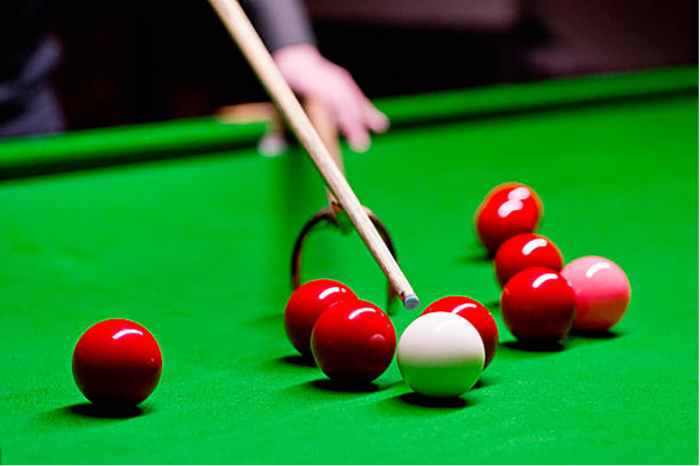
Have you ever struck a shot where, the moment the ball left the cue tip, it felt absolutely flawless? There was no hesitation, no shred of doubt, just that crisp, satisfying sensation, as if everything had aligned perfectly. You knew even before the cue ball had reached the pocket that it was destined to go in.
Yet, just minutes later, you miss a simple shot and find yourself completely unable to explain why. This is one of the most perplexing phenomena in the game of billiards. But lying beneath it is a crucial element that many players often overlook: feedback.
The True Meaning of “Cue Feedback”
The term might sound technical, but it really isn’t. “Cue feedback” simply refers to the various pieces of information, transmitted through your hands, your fingers, and even the sound it produces that the snooker cue conveys to you the moment you strike the ball.
A high-quality shot typically feels crisp and imbued with a sense of control; a poor shot, conversely, feels dull, vague, or even slightly awkward. Over time, your brain gradually learns to recognize these signals. You begin to develop a keen sensitivity, enabling you to distinguish precisely between a clean, decisive strike and a hurried, sloppy one.
If you play with a snooker cue featuring a shaft made of responsive Ash wood which offers richer feedback and a more precise sense of control, this learning process becomes even clearer and more distinct. The cue seems to be “conversing” with you; if you simply take the time to listen, your game will naturally improve as a result.
Why Some Players Improve Faster Than Others
In any billiards club, you will likely observe this phenomenon: two players practicing the exact same shot. One improves by leaps and bounds, while the other seems to remain completely stagnant. The reason for this disparity often lies not in the amount of effort expended, but rather in the presence or absence of “perceptual awareness.”
Players who are attuned to the feedback provided by their cue stick are often the ones who are able to adjust their stroke and technique the fastest. They possess the keen sensitivity to discern precisely what occurred during a shot, whether they struck the cue ball too high or too low, or inadvertently imparted unnecessary side spin. Conversely, players who remain oblivious to such feedback often find themselves trapped in a vicious cycle of repeating the same mistakes.
For this very reason, investing in finely crafted snooker cues can often mark a pivotal turning point in the development of your game. A high-quality cue provides clearer and more consistent feedback, enabling you to gain fresh insights and make tangible improvements with every practice stroke.
The Problem with “Dead” Cues
Not all cues are capable of effectively transmitting information. Some cues feel utterly lifeless; when you strike the ball, the tactile sensation feels dull and indistinct, as if you were attempting to play while wearing a pair of thick, heavy gloves.
This phenomenon is particularly common among heavily worn or crudely manufactured “house cues” (shared cues found at clubs). Such cues often harbor various hidden flaws: the cue tip may be deformed from excessive pressure, the cue shaft may have sustained minor damage, or the cue’s overall balance point may be severely compromised.
The consequence is a complete loss of that vital “sense of connection”, the intimate link that ought to exist between your physical stroking motion and the resulting effect on the cue ball. It is akin to driving a car with loose steering; although the vehicle is moving, you lack full and precise control over its movements.
Feedback Builds Confidence
In cue sports, confidence is not a loud or theatrical display; rather, it is something profoundly subtle. It is reflected in your demeanor as you approach the pool table, in the fluidity of your stroke, and, above all, in the focus and commitment you bring to every single shot. The bedrock of this confidence often lies in trust, specifically, the belief that your cue will respond exactly as you intend.
A reliable cue sticks pool, one crafted by the hands of a renowned artisan like Mark Richard can provide you with precisely this kind of stability. You will begin to recognize that “beautiful,” pure sensation of a perfectly struck shot, and you will make it your objective to replicate that feeling time and time again. Through steady accumulation over time, your self-confidence will quietly and imperceptibly begin to grow.
How to Train Your Feel for the Game
The good news is: improving your ability to perceive the feedback from your cue stick is actually quite simple. Try the following methods during your next practice session:
1.Slow Everything Down
Attempt to strike the ball gently, focusing your attention on the sensations generated at the precise moment the cue makes contact.
2.Listen Carefully
The sound produced when striking the ball often contains far more information than you might imagine.
3.Practice Simple Shots Repeatedly
Don’t chase difficult pots refine your touch on basic ones. Over time, you’ll start to notice patterns. You’ll recognise what a clean strike feels like and when something’s off.
Do not rush to attempt highly difficult shots; instead, focus on refining the feel of your basic strokes. Given time, you will begin to discern the underlying patterns. You will clearly recognize the unique sensation of a “pure” strike, and you will also become acutely aware of when a shot has gone awry.
The Role of Equipment in Long-Term Improvement
There is a very good reason why seasoned players are willing to invest in their own personal cue sticks. It is not about flaunting status or prestige; it is about shot consistency. A well-balanced, high-performance cue not only helps you execute higher-quality shots but also enables you to gain deeper insight into and a better understanding of your own technique.
When your cue responds in a completely consistent manner with every stroke, your brain is able to learn and adapt much more rapidly. Your body will follow suit, allowing your shot-making technique to become increasingly steady and reliable.
Do you remember those “effortless, fluid shots” we mentioned at the beginning of this article? They are no accident. They are the result of a synergy between good habits, clear feedback, and trustworthy cue equipment. When these three elements align perfectly, the entire experience of the game becomes smoother, more streamlined, and infinitely more enjoyable. It is at that very moment that you begin to witness true progress.
Learn to Feel the Game
Billiards is about far more than just angles and technique; it is fundamentally about feel. The more closely you pay attention to the subtle signals transmitted to you by your cue, the more precisely you will be able to control every single shot.
Therefore, the next time you stand at the table, do not simply stare at the ball. Feel the sensation of the strike, listen to the sound of the impact, and capture the subtle nuances within. For once you learn to perceive and grasp these details, you are no longer merely “playing” the game, you are truly “understanding” it.