
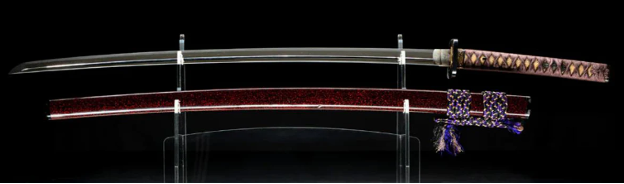
The Japanese katana represents one of history’s most iconic melee weapons, renowned for its curved single-edged blade and association with Japan’s feudal samurai warriors. Behind the katana’s legendary cutting ability and resilience lies an innovative, complex manufacturing process called lamination. This technique combines both hard and soft steels in the blade to balance strength, flexibility, and sharpness through meticulous craftsmanship.
While most authentic Japanese swords utilize lamination of multiple steels, rare exceptions exist of all-steel katanas, forged from a single piece of high carbon steel. However, these homogeneous steel blades saw significant drawbacks and limitations compared to the refined, predominant lamination practices.

Foundations of Japanese Swordmaking
To appreciate the novelty of single-steel katanas, one must understand the deep swordmaking traditions that developed in Japan over a millennia. Blades evolved from primitive iron and steel weapons from mainland Asia into a uniquely Japanese form by around 900 AD. The techniques used to produce the curved, single-edged, slim katana blade became increasingly sophisticated.
By the Kamakura period (1185–1333 AD), famous samurai swords were forged by expert craftsmen from multiple soft and hard iron sand steels. The steels were stacked, hammer welded, stretched, and folded to create hundreds of laminated layers throughout the blade. Master smiths carefully controlled impurities and carbon content during smelting and refining to further customize the steel.
Differential heat treatments were then applied to harden the edge while keeping the back flexible. Each school of swordmakers introduced slight variations in materials, forging methods, and blade geometry while upholding the laminated style. This labor-intensive process produced strong, keen blades with graceful curvature and characteristic temper lines.
Wartime Pressures Disrupt Tradition
By the 14th century, the Japanese lamination technique had been perfected as an integral part of samurai culture. However, under the extreme pressures of constant warfare, traditional practices became disrupted. The Nanboku-chō civil war period stretched the resources of swordmakers, requiring mass armament production through shortcuts.
Faced with the demand for cheap quantity over refined quality, some swordsmiths resorted to abandoning lamination altogether. They forged crude weapons solely from hardened steel both to hasten production and conserve materials for more blades. These rare all-steel katanas represent an anomaly forced by the pressures of wartime necessity on bladesmiths.
Although they sacrificed the optimized performance of laminated katanas, these hastily manufactured, mono-steel swords fulfilled the urgent need to arm soldiers quickly. The very existence of such crude, all-steel weapons attests to the production strains and scarcity swordmakers faced trying to equip massive 16th century armies.
Challenges of Forgoing Lamination
While the minority of all-steel katanas served their purpose as expedient battlefield weapons, they suffered from the lack of lamination compared to traditional blades. Removing the softer steel core prevented the specialized treatment and material balance between the spine and edge that katanas were renowned for.
The absence of soft steel resulted in blades that were overly rigid and brittle. They lacked the shock-absorbing flexibility and tensile strength of laminated katanas. The crude single-steel swords were prone to fracturing or shattering under combat stress. Hardness also made them difficult to sharpen without compromising the blade.
With uniform material properties throughout, the mono-steel blades could not be selectively heat treated and tempered to achieve optimal qualities from back to edge. This variability gave traditional katanas their characteristic graceful profile and tactical versatility. Consequently, the rare all-steel katanas were functionally and aesthetically inferior.
Artistic All-Steel Blades in Peace Time
Once Japan entered the peaceful Edo period from 1603 AD onwards, some swordsmiths had the freedom to return to experimental all-steel blades, not for combat, but as artistic demonstrations of skill. Using purified metals and clever forging techniques, these specialty blades overcame earlier limitations.
Some of these later single-steel swords measured residual stresses and hardness across the blade to minimize brittleness while maintaining a keen edge after quenching. The work of gifted master smiths produced exceptionally strong yet flexible all-steel katanas, almost comparable to traditional lamination.
However, even after centuries of refinement, the all-steel method never fully matched the versatility and well-rounded performance of laminated katanas. Relying on a single steel necessitated too many trade-offs. As such, all-steel blades remained niche novelty works, overshadowed by the cultural legacy of the laminated samurai sword.
Reasons for Predominance of Laminated Construction
Laminating multiple steels creates complementary properties within a blade for good reason. The precise combination of soft-core steel and hard-edge steel allowed katanas to withstand tremendous force from all angles while retaining sharpness. This reliability made laminated weapons highly effective in the chaos of battle.
The specialized treatment of different areas along the sword also lent itself to the graceful curvature and aesthetic beauty that characterized the katana. Mono-steel blades lacked these nuanced qualities and customization.
Moreover, the layered structure provided redundancy against damage, allowing one section to fail without compromising the whole blade. This durability and damage resistance gave laminated swords exceptionally long service lives, some lasting centuries. The longevity resonated with the Japanese ideals of quality and legacy.
Finally, the lamination technique aligned with the Japanese philosophy of enhancing natural materials rather than overpowering or needing to conquer them. Lamination built upon the innate qualities of various steels to create a synergistic, optimized blade.
Conclusion
In conclusion, while rare examples of all-steel katanas do exist, they were never a prominent style or construction method in Japanese swordmaking. The traditional laminated technique proved vastly superior and has been used to produce katanas for over a millennium.
Any all-steel blades were likely forged in haste under urgent battlefield demand or as novelty experiments. With an inherent fragility and lack of flexibility, single-steel katanas saw very limited use when compared to the layered katanas that came to characterize Japan’s samurai culture.
So while not entirely unheard of, all-steel Japanese swords were decidedly uncommon aberrations from the norm when it comes to katana construction and history. The iconic curved blade would not be what it is today without the hard and soft steel lamination technique.
This innovative bladesmithing result originated from centuries of metallurgical knowledge building upon previous generations to optimize the katana’s sharpness, strength, flexibility, and durability. While deviations occurred, the laminated katana form stands out as Japan’s most culturally and functionally significant sword.